King Card Game Rules: How to Play and Score Sheet
Updated: · 👥 Online, up to 4 players🔗 Online with a friend🤖 Vs computer🌍 Random opponent
King is a classic Turkish trick-taking game for four players with a 52-card deck. A full game has 20 deals; in each one the player whose turn it is picks a penalty game or a trump game, and everyone plays by that contract. You dodge negative points in penalty games and collect tricks for positive points in trump games, and the highest total at the end wins.
 ▶ Play King (Turkish Card Game) nowFree, no download, no sign-up.
Cards, players and the deal
King uses a standard 52-card deck and four players. Each deal the cards are shuffled and everyone gets 13. Play goes counter-clockwise. Aces are high and twos low; no suit outranks another except a chosen trump.
The right to choose the contract moves one seat each deal. The chooser looks at their hand, picks the contract and leads the first card.
Picks: three penalties and two trumps
- Full King (20 deals): every player chooses five times: 3 penalty games and 2 trump games.
- Each penalty game can be played at most twice at the table. Six penalties × 2 makes 12 penalty deals; four players × 2 makes 8 trump deals.
- Quick King (8 deals): 1 penalty and 1 trump each, and every penalty at most once.
Zipi's King score sheet shows who chose what and how many picks everyone has left; a penalty that has been used up disappears from the menu.
Basic rules of play
- You must follow suit. The highest card of the suit led wins (the highest trump in a trump game), and the winner leads next.
- If you cannot follow suit: in a trump game you must trump, and overtrump a trump already down if you can. In a penalty game you must discard a penalty card if you hold one (a heart in No Hearts, a queen in No Queens, and so on).
- Dropping penalty cards: if a higher card of the suit is already on the table, you must play your penalty card of that suit. In No Queens you drop the queen when the king or ace is down; in No Kings/Jacks a king or jack when a higher card is down; in Rıfkı the king of hearts when the ace of hearts is down.
- In No Hearts and Rıfkı, hearts cannot be led until broken. In trump games, trumps cannot be led until someone has trumped, unless you hold nothing else.
- A deal ends early once every penalty card has been taken.
King scoring table
| Game | Avoid | Points | Deal total |
|---|---|---|---|
| No Tricks (El almaz) | Each trick | −50 | −650 |
| No Hearts (Kupa almaz) | Each heart | −30 | −390 |
| No Kings/Jacks (Erkek almaz) | Each king and jack | −60 | −480 |
| No Queens (Kız almaz) | Each queen | −100 | −400 |
| Rıfkı | King of hearts | −320 | −320 |
| Last Two (Son iki) | Each of the last two tricks | −180 | −360 |
| Trumps (Koz) | Each trick won | +50 | +650 |
With every penalty played twice, penalties hand out −5200 and the eight trump deals +5200, so all scores in a full game add up to zero. It is a handy way to check the score sheet.
Trump games
The chooser names one of the four suits as trump and leads. Every trick you win is +50. You must follow suit; if you cannot, you must trump and beat any trump already played. Trumps may not be led until someone has trumped.
Zipi variant: some tables also force you to play higher within the suit led. In Zipi there is no such rule when following suit; the only compulsory overtake is when you trump.
End of the game
Full King ends after 20 deals and Quick King after 8. The score sheet adds up every deal and the highest total wins. When all penalty cards are gone in a deal (for example once the king of hearts falls in Rıfkı) the remaining tricks are not played.
Common mistakes
- Forgetting the drop rule: in No Queens you cannot hold your queen once the ace of that suit is down; the game forces it out.
- Using up penalties early: pick a penalty with a strong trump hand and you may later have to choose trumps with a weak one.
- Ignoring Last Two: those two tricks cost −360 together, so keep low cards for the end.
- Leading hearts too soon: in No Hearts and Rıfkı you cannot lead hearts before they are broken.
King strategy tips
- Match the contract to your hand: a hand full of low cards suits No Tricks or No Hearts; a long, strong suit suits trumps.
- Save trumps for good hands: once your trump picks are gone, strong hands are wasted.
- Duck under: in penalty games play just below the highest card on the table so someone else takes the trick.
- Create a void: running out of a suit lets you dump penalty cards when it is led.
- Count key cards: track the ace and king of hearts in Rıfkı and how many queens have fallen in No Queens.
- Read the sheet: knowing which penalties are used up tells you what opponents can still choose.
Play King online on Zipi
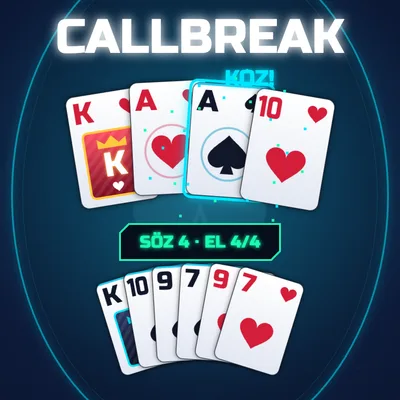
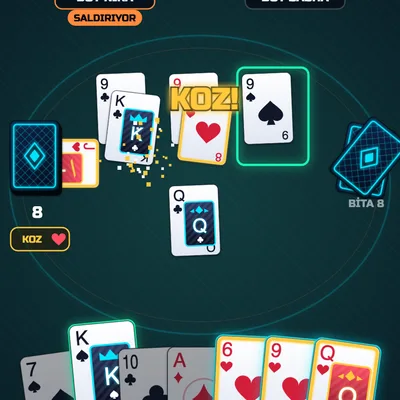
King plays in your browser on Zipi with no account. In the career you face three bots; finish a game with the top score to level up, and the bots start counting cards, ducking in penalty games and drawing trumps. Quick King suits shorter sessions. At the online table you can invite friends with a room code or match with players worldwide, with bots taking empty seats. The game is played for points only.
FAQ
How many points is Rıfkı?
Taking the king of hearts in Rıfkı costs −320 points, and the deal ends as soon as that card falls.
What are the King card game scores?
No Tricks −50 per trick, No Hearts −30 per heart, No Kings/Jacks −60 each, No Queens −100 each, Rıfkı −320, Last Two −180 per trick, and +50 per trick in trump games.
How many penalties and trumps does each player choose?
In Full King each player picks 3 penalties and 2 trumps over 20 deals. In Quick King it is 1 of each over 8 deals.
How often can a penalty game be played?
At most twice per table in Full King, and once in Quick King.
Why do King scores add up to zero?
Twelve penalty deals hand out −5200 in total and eight trump deals hand out +5200, so the two balance exactly.
Can I keep my queen in No Queens?
Not if the king or ace of that suit is already on the table and you must follow suit; then you have to play the queen. Otherwise you may keep it.
Which way does play go in King?
In Zipi play goes counter-clockwise, and the right to choose the contract moves one seat each deal.